
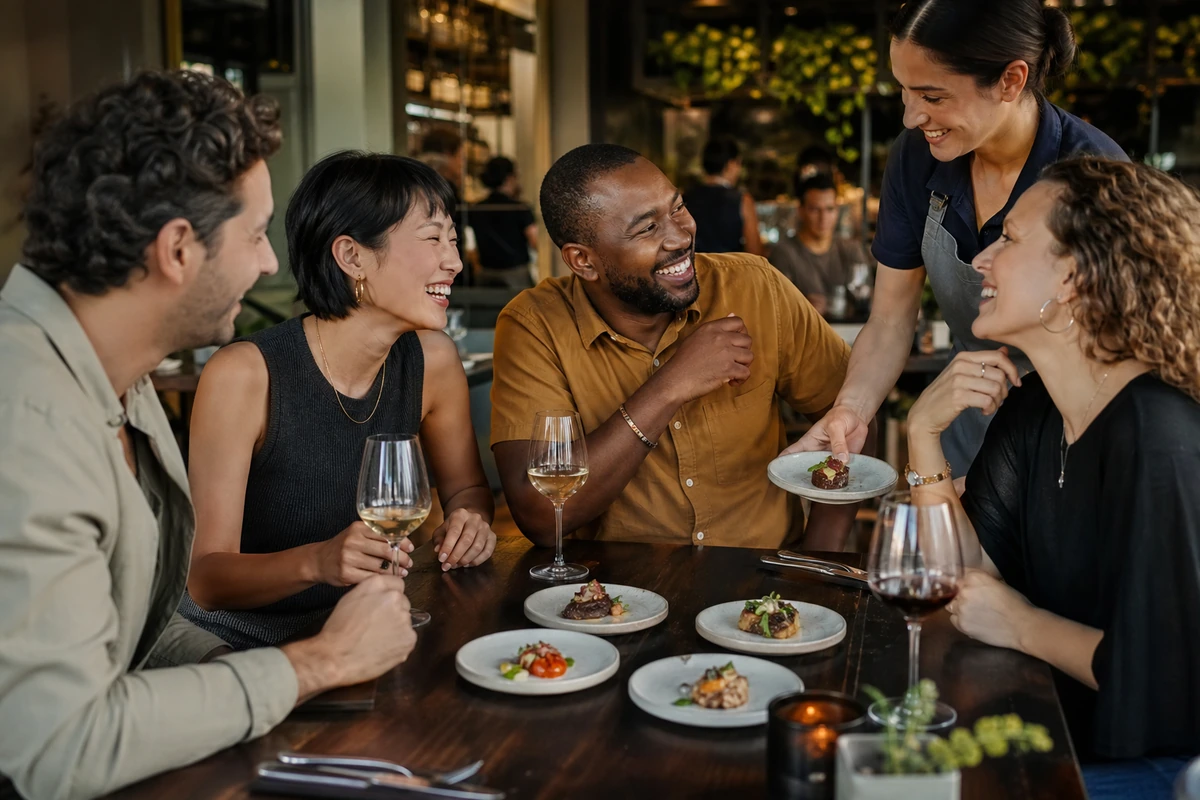
Start with something guests already enjoy about the restaurant, then turn it into one simple shared action: a tasting, comparison, challenge, or menu choice made together. Keep participation optional, train the team, test it during a controlled service window, and judge it by both guest response and operational performance before expanding it.
Why a shared restaurant ritual can matter
A recent QSR Magazine outside-insights article argues that restaurants can move beyond convenience by giving guests authentic reasons to gather, participate, and connect. The author, Mark Unger, is chief creative officer of branding agency Push, so the examples should be read as a creative-industry perspective rather than a universal performance benchmark.
The useful idea is smaller than a major redesign. A restaurant can make one familiar part of the visit more social: comparing flavors, sharing a menu format, trying a clearly explained challenge, or discovering a rotating item together. The goal is not forced entertainment. It is to give a group something natural to do and talk about while hospitality remains the priority.
Start with what guests already recognize
The source recommends beginning with a real brand truth instead of copying a trend. Look for the food, service habit, room feature, or recurring question that guests already notice. That is a safer starting point than inventing a gimmick that the restaurant cannot own.
Talk with servers, hosts, bartenders, and regulars. Review repeat mentions in guest feedback. Then choose one idea that is specific enough to explain in a sentence and simple enough to deliver consistently.
- A sampler built around an existing signature category
- A table-sized item designed for sharing
- A rotating flavor that groups can compare
- A light challenge with a comfortable non-challenge option
Give guests one clear role
A social ritual needs participation, not just something to watch. Decide exactly what guests will do: choose, rank, compare, share, vote, or complete a small challenge. Keep the action obvious and optional so it adds energy without putting anyone on the spot.
The menu description and staff explanation should match. If the experience takes several sentences to explain, creates uncertainty about price, or requires guests to use a confusing process, simplify it before launch.
- State the action in one sentence
- Make the price and portion clear before the order
- Offer an easy alternative for guests who do not want to participate
- Avoid requiring public posting or personal data to take part
Protect hospitality and service flow
The QSR article cautions that adventure should not create friction and must survive a busy Friday night. Translate that warning into a real service test. Map every new step from ordering through preparation, delivery, cleanup, and payment before exposing the idea to a full dining room.
Run a short practice with the team. Check whether the experience slows the line, crowds a pickup area, confuses kitchen tickets, produces excess waste, or distracts staff from guests who want a normal visit. A memorable idea is only useful when the restaurant can execute it without weakening the rest of the meal.
- Assign one person to explain the experience during the test
- Set a clear capacity or time window
- Confirm the POS button, modifiers, and kitchen routing before service
- Write down the stop conditions that would end the pilot
Connect the first experience to the next visit
A ritual becomes more valuable when guests know there will be a reason to return. That could be a new flavor, a monthly variation, a different pairing, or a recurring event window. Keep the cadence realistic; promising constant novelty can create more operational pressure than guest value.
Use the same plain language across the menu, website, reservation notes, and restaurant marketing. If a guest enjoys the first experience, the next step should be easy to find without depending on a staff member remembering a long explanation.
- Name the next date or rotation only after it is operationally confirmed
- Link promotions to the exact reservation, order, or details page
- Invite opt-in follow-up without making participation conditional
- Keep the core experience strong even for guests who never return
Measure a pilot without overclaiming
Decide what success means before the test. Useful measures might include participation, sales mix for the featured item, preparation time, remakes, guest comments, opt-in signups, or return visits among guests who can be compared responsibly. Keep average spend and repeat-visit measures separate so one strong number does not hide a service problem.
Compare a limited pilot with a similar baseline period, then read the result as directional evidence. A change in sales or visits can have many causes. The point is to learn whether this restaurant can deliver the ritual consistently and whether guests choose it again—not to claim that one idea caused every outcome.
- Record the test dates, service windows, and participating items
- Track guest response and operational exceptions together
- Review results with both front- and back-of-house staff
- Expand only after the experience and the service guardrails both hold
A practical four-week rollout
Week one is for choosing one brand-rooted idea and defining the guest action. Week two is for menu, POS, kitchen, price, and staff checks. Week three is a controlled service pilot. Week four is for comparing results, collecting team feedback, and deciding whether to adjust, repeat, or retire the idea.
This approach keeps the restaurant growth goal clear: create a visit people genuinely enjoy together, then make the experience dependable enough to earn another visit.
- Week 1: choose the ritual and the guest role
- Week 2: build and rehearse the service path
- Week 3: test in a bounded window
- Week 4: review, refine, repeat, or stop
Submit a restaurant or local business.
Share the business details, useful links, and what makes the place worth knowing for possible Restaurant Tech Report coverage.
FAQ
Does a social restaurant experience need games or expensive entertainment?
No. It can be a simple tasting, shared menu format, flavor comparison, or recurring ritual tied to something the restaurant already does well. The experience should fit the brand and remain easy to operate.
How should a restaurant test the idea?
Use a limited service window, train the team, confirm POS and kitchen routing, define stop conditions, and measure both guest response and operational effects before expanding.
Should guests have to post on social media?
No. The experience should be worthwhile on its own. Organic sharing may happen, but requiring a post can add friction and should not replace a clear guest benefit.
Which results should operators review?
Review participation, sales mix, preparation time, waste or remakes, guest feedback, opt-in signups, and repeat visits where they can be measured responsibly. Treat the results as directional rather than proof of a single cause.