
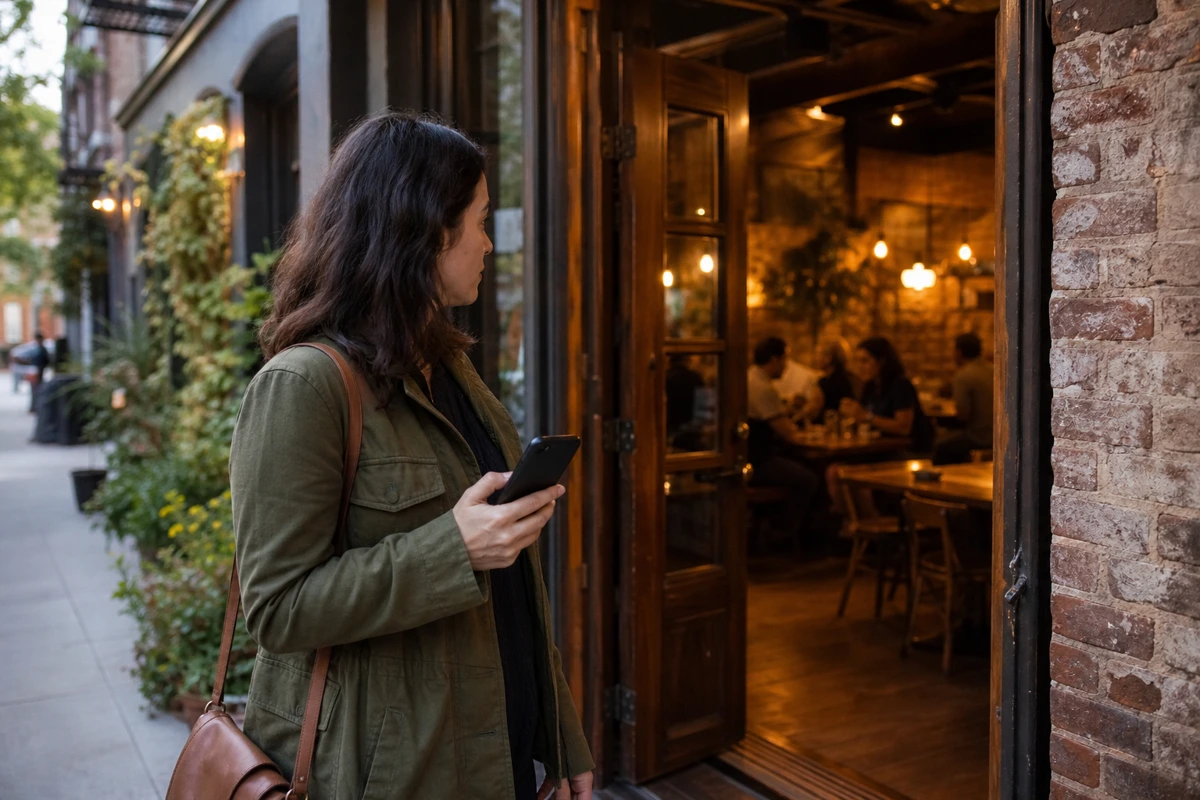
Treat Google Maps interest as the start of a guest journey, not proof of a visit. Check your restaurant's location, hours, entrance and booking path on a real phone. Then compare directions requests and other profile actions with separately recorded reservations and arrivals. Google's new dining lists are a discovery feature, not a published formula for earning a place or increasing sales.
What Google's dining lists actually tell you
Google Maps has launched its first Fan-Favorite Dining Lists, according to Patricia Cobe's October 8 report in Nation's Restaurant News. The lists cover ten cities, including Atlanta, Chicago, New York, San Francisco and Seattle, alongside five cities outside the United States. Diners can browse by meal, beverage, sweet treat and occasion rather than starting with a restaurant name.
Google's own interactive hub says the 2026 selection uses Maps information from September 1, 2025 through August 31, 2026. It names Local Guides reviews and ratings, aggregated searches for directions, and a final verification process. That is Google's description of its own feature, not an independent study of restaurant sales.
The useful question for a neighborhood restaurant is what happens after someone becomes interested. Can that diner confirm the right location, plan the visit and find the entrance? The checks below are practical guidance for that journey. They are not Google's eligibility criteria, and completing them does not promise inclusion in a list or a better search position.
Start with one first-time guest's trip
Choose a real occasion you can serve well: a weekday lunch, dinner before a nearby show, or coffee between errands. Ask someone unfamiliar with the property to find your restaurant on their own phone and describe what they expect before leaving. Do not coach them through the confusing bits.
Have them check the exact location, the intended day's hours and the route to the door. A dining room inside a larger building, a shared parking lot or an entrance around the corner can make an otherwise straightforward visit hard to finish. Walk the last part of the route yourself and record where the online information stops being helpful.
Keep this a small operational check. You do not need a fake review, a public test booking or a new promotion. A short list of observed obstacles is more useful than an owner declaring that the listing looks fine.
Make the arrival information match the property
Google's local-ranking guidance recommends complete, accurate business information, including the address, hours, business category and relevant details such as parking. Verify the information for each location rather than assuming the chain's main website or another branch is enough.
Give guests truthful arrival guidance on the restaurant's own mobile page. If the public entrance is on a different street from the postal address, say so clearly. Describe parking or access only when the details are verified, and avoid sending guests through a staff entrance or across a restricted property.
Fix the biggest observed obstacle first. Update a wrong closing time before polishing a photo caption. Check special hours for the actual day the guest plans to come. Once you make the correction, repeat the phone journey and confirm that the public information changed; saving an edit is not the same as seeing the corrected result.
Connect the dining occasion to an honest next step
The dining lists group places around reasons to go, including celebrations and value. You can use that as a planning prompt without pretending your restaurant won a Google distinction. Explain the occasion you genuinely serve, with a current menu and a clear next action.
For a reservation-led dinner, the next action should take the guest to the correct location's availability. For walk-in lunch, explain how seating works and where to check the menu. Test the destination on a phone. A generic homepage that sends guests searching again adds work just when they are trying to decide.
If you are actually included in a list, verify the listing and category before referring to it publicly. Do not create an unofficial badge or suggest Google recommends a location that is not named. Restaurants outside the covered cities can still run the arrival check; the guide's geographic limits do not change the need for accurate guest information.
Keep directions requests separate from visits
Google's Business Profile performance documentation defines directions as requests for directions to the business. It says the count accounts for multiple taps, cancellations and spam. That metric is not a count of people who entered your restaurant or bought dinner.
The same documentation distinguishes website clicks, call-button clicks and bookings, with availability depending on the business and setup. It also says performance includes activity from organic results and Google Ads. Check what your own report contains before treating every action as free discovery or a completed sale.
Record the nearest confirmed restaurant outcome separately. That could be a completed reservation in your booking system, an arrival recorded by the host, or a guest voluntarily saying they found you on Maps. A brief, optional host question can provide context, but guests who answer are not a representative sample. Do not divide all seated guests by directions requests and call the result a verified conversion rate.
Test one correction against a comparable period
Before changing the arrival page, record the current profile actions and the restaurant outcomes you can reliably count. Note opening hours, closed days, local events and any advertising. Pick a comparison period that includes the same service days and dayparts, and leave enough time for your restaurant's normal volume to produce a useful record.
Change one guest-facing detail, such as clarifying the entrance or replacing an incorrect reservation destination. Keep a dated note of what changed and verify it publicly. Continue recording guest confusion as well as bookings and arrivals; fewer calls asking where the door is can be useful evidence even when sales are noisy.
A before-and-after difference is a signal to investigate, not proof that one edit caused more visits. Weather, events, advertising and the new dining lists can all affect attention. Keep a correction when it makes the trip more accurate and easier to complete, then test the next obstacle rather than claiming a ranking breakthrough.
Assign someone to recheck the guest route
Make the arrival check part of normal restaurant upkeep. Assign a person to verify hours and links after a schedule change, a booking-system change, building work or a new parking arrangement. Have the host team report recurring arrival questions so the page reflects what guests actually need.
Google says local results depend mainly on relevance, distance and popularity, and that businesses cannot request or pay for a better local ranking. Focus on information you can truthfully maintain and a visit you can deliver. This week, follow one unfamiliar guest's route from their phone to your door and fix the first thing that makes them hesitate.
Submit a restaurant or local business.
Share the business details, useful links, and what makes the place worth knowing for possible Restaurant Tech Report coverage.
FAQ
Does requesting directions mean a guest visited the restaurant?
No. Google describes directions as requests for directions, with counting adjustments for repeated taps, cancellations and spam. Record reservations, arrivals or orders separately; a directions request does not verify a sale.
Will an arrival audit get a restaurant onto a Google dining list?
No inclusion guarantee is established by the sources. Google's hub describes the information used to select the lists, but this audit is practical restaurant guidance, not a qualification checklist or a way to purchase placement.
Can a restaurant outside the ten listed cities use these checks?
Yes. The new lists cover ten cities, but checking accurate hours, the right location, the entrance and the next action is useful guest-service work wherever a restaurant operates. Do not imply that an unlisted restaurant received a Google distinction.
What should a small restaurant measure first?
Start with the profile actions available to your location and one separately confirmed outcome, such as completed reservations or host-recorded arrivals. Record the change date and unusual conditions, and treat the comparison as directional evidence rather than proof of causation.