
Test a slow-night reward in one defined service window, with clear eligibility and a fixed review date. Compare that window with similar weeks, then check total weekly visits, net sales and reward costs. A busier Tuesday is not enough if Wednesday loses the same guests. Keep the offer only when the combined results justify its cost and the guest experience holds up.
A reward night is an invitation, not evidence of growth
On October 9, 2026, QSR Magazine reported that MOD Pizza was offering double rewards points on pizza purchases every Tuesday in October for MOD Rewards members. The report describes a limited-time loyalty promotion, including signature and customizable pizzas. It does not report extra visits, profit, redemption rates or results from the offer.
That makes it a useful example of a recurring visit reason, not proof that double points will work for an independent restaurant. The question for your dining room is narrower: can a defined reward bring guests back during hours when you have spare capacity, without giving away too much value or simply moving visits from nearby days?
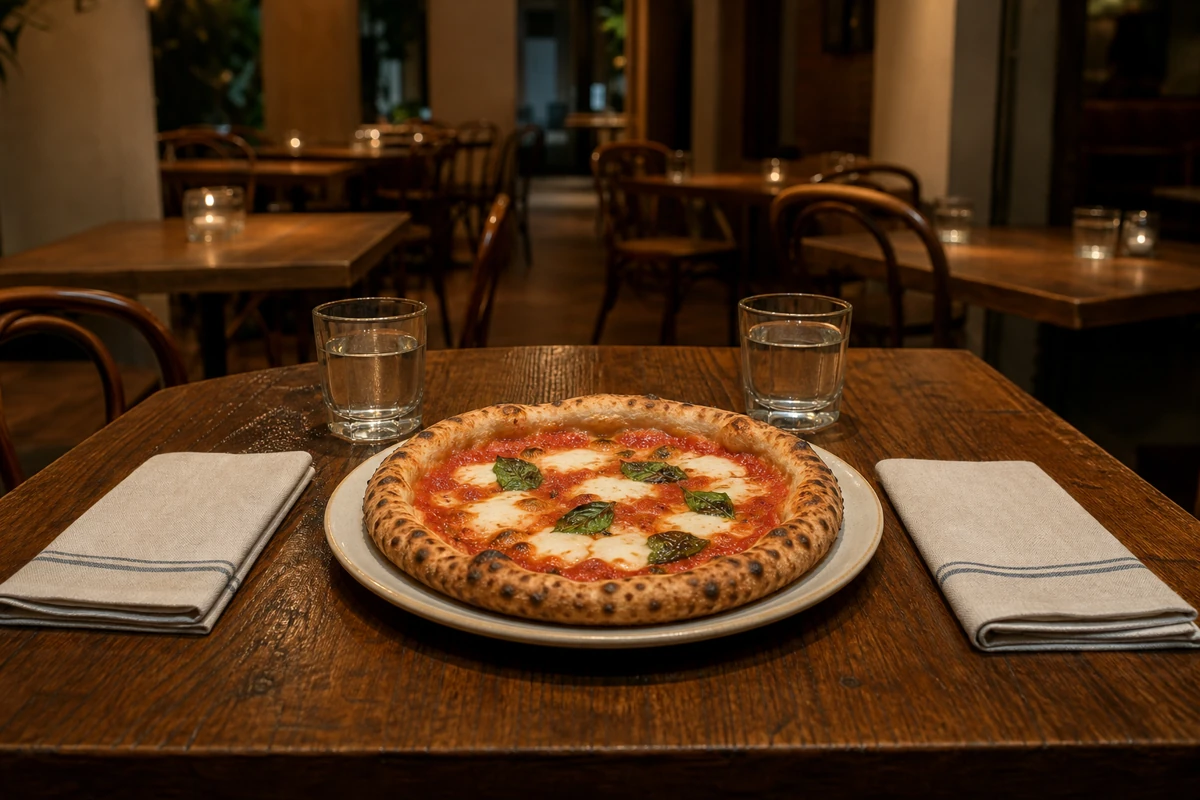
The testing approach below is editorial guidance, not MOD Pizza's operating plan. We have not tested its program or verified its current checkout rules. The accompanying image is a generated editorial scene, not a photograph of MOD Pizza.
Pick the quiet window your restaurant actually needs to fill
Start with your own recent sales and visit records. Look for a repeatable weak period, such as an early dinner window on a particular weekday, rather than assuming Tuesday is always slow. Separate dine-in, pickup and delivery so a shift between channels does not look like a new visit.
Compare several similar weeks and note holidays, closures, weather disruptions, local events and other offers. A one-night spike against an unusually poor baseline is weak evidence. If visits are not reliably recorded, use completed checks as a proxy and say so; a check can cover more than one guest.
Set the question before launch: will this offer add worthwhile business in this window while improving, or at least not weakening, the week's overall result? Choose a start date, end date and review date. If you have comparable locations, a location without the offer can provide another reference, although it will not eliminate every difference.
Price the future reward as well as tonight's sale
Points do not necessarily reduce tonight's check, but they can create a future redemption cost. Write down the normal earning rule, the extra points awarded and how redemption works in your own program. Double points are not automatically the same as a percentage discount.
Review net sales alongside food cost, packaging, channel charges, any added labor and the reward cost you expect from the promotion. Keep the comparison consistent across baseline and test periods. If future redemption behavior is uncertain, use a conservative estimate and revisit it after guests have had time to redeem.
This is an operating review, not accounting advice. Ask whoever manages your books how rewards should be treated in formal reporting. Avoid counting the same reward twice if its effect is already included in the sales figure you use.
- Define which purchases earn the bonus, which channels qualify and whether other offers can be combined.
- Set a reward budget and a stop condition before guests see the offer.
- Check whether the offer can be delivered with existing capacity rather than adding a shift it cannot support.
Make the promise clear at the table and checkout
Keep the invitation simple: the qualifying day or hours, eligible items, membership requirement, how guests earn the bonus and any exclusions. Send reminders only to guests who have agreed to receive that type of message. Do not turn one promotion into a reason to contact people without permission.
Before launch, verify a qualifying purchase in the actual ordering path and confirm the points appear correctly. Check a nonqualifying purchase too. Use the program's test mode where available; otherwise follow an approved staff test and reconcile any test transaction and points afterward. This is a check your team should perform, not a claim that we tested your system.
Brief servers and cashiers on one short explanation and an exception path. A guest should not have to negotiate with a manager to receive a clearly promised reward. Record missing-points complaints, unexpected stacking and refund behavior during the trial.
Watch the whole week for visits that moved
Measure the promoted window, but do not stop there. Compare nearby days and total weekly visits or completed checks, net sales and your consistent contribution estimate. If the offer night grows while the surrounding nights fall, some of the activity may have moved rather than increased.
Where your existing loyalty records allow it, look at whether participating guests visit more often across the full review period. Do not claim to identify every guest: anonymous checks, shared accounts and missing member identification leave gaps. Keep reporting aggregated and restrict access to guest-level records.
Your results are directional unless the test design supports a stronger conclusion. Seasonality, menu changes and local events can affect demand. Use those limits to choose a smaller next test rather than declaring that the reward caused every extra check.
- Track the offer window's completed checks, net sales and average check.
- Track the same measures for surrounding days and the full week.
- Track bonus points issued, later redemptions and the reward-cost estimate.
- Track wait times, complaints, remakes and missing-points fixes so a busy night does not hide poor service.
Give the next visit a reason beyond more points
Use the offer to introduce a repeatable occasion: a convenient early dinner, a dependable pickup routine or a menu item guests want again. Keep the experience good enough to stand on its own when the bonus ends.
Make the next step clear through your normal loyalty balance display, receipt or permitted follow-up. Show how a guest can use earned value without inventing urgency or promising a reward the program cannot deliver. Then allow enough time to see whether guests return, including after the promotional window closes.
This test is different from an enrollment or first-redemption audit. Its main question is whether a recurring reward night adds worthwhile visits across the calendar, not simply whether guests joined or claimed one reward.
Decide whether to keep, change or stop the offer
At the agreed review date, bring the sales comparison, reward-cost estimate and service notes together. Continue cautiously if the offer window improves, the full-week result supports it and costs remain acceptable. A single busy service is not a reason to make the offer permanent.
Change one variable when the trial exposes a specific problem: a confusing rule, a window that is too broad or an incentive that rewards purchases guests already make. Stop if rewards exceed the budget, demand mostly moves between days or the guest experience suffers. Honor rewards already promised according to the published terms.
Keep a short record of what you offered, who was eligible, how you measured it and what you decided. That record makes the next slow-night experiment more useful than repeating a promotion because the room once looked full.
Submit a restaurant or local business.
Share the business details, useful links, and what makes the place worth knowing for possible Restaurant Tech Report coverage.
FAQ
Does MOD Pizza's double-points promotion prove the tactic works?
No. QSR Magazine reports the October Tuesday promotion, but its item does not provide sales, profit, visit or redemption results. Treat it as one chain's example, not a performance benchmark.
Should every restaurant choose Tuesday for a reward night?
No. Choose a recurring weak service window using your own comparable sales and visit records. A day that is quiet for one restaurant may already be busy for another.
How can I tell whether visits increased or just moved?
Compare the offer window, surrounding days and total weekly visits or completed checks with comparable periods. Loyalty visit histories can add context, but anonymous activity and other demand changes limit certainty.
Are double points the same as a discount?
Not necessarily. Their value and cost depend on your earning rules, redemption rules and actual redemption behavior. Estimate the future reward cost instead of assuming points are free.
Can I run a useful test without perfect guest-level data?
Yes. Start with completed checks, net sales, reward records and service notes. State that checks are a proxy for visits, keep comparisons consistent and avoid claiming that every change was caused by the offer.
When should I stop the promotion?
Use the budget and stop conditions set before launch. Stop or revise it if costs are unacceptable, the full-week result does not support it or service suffers, while honoring rewards already promised under the published terms.