
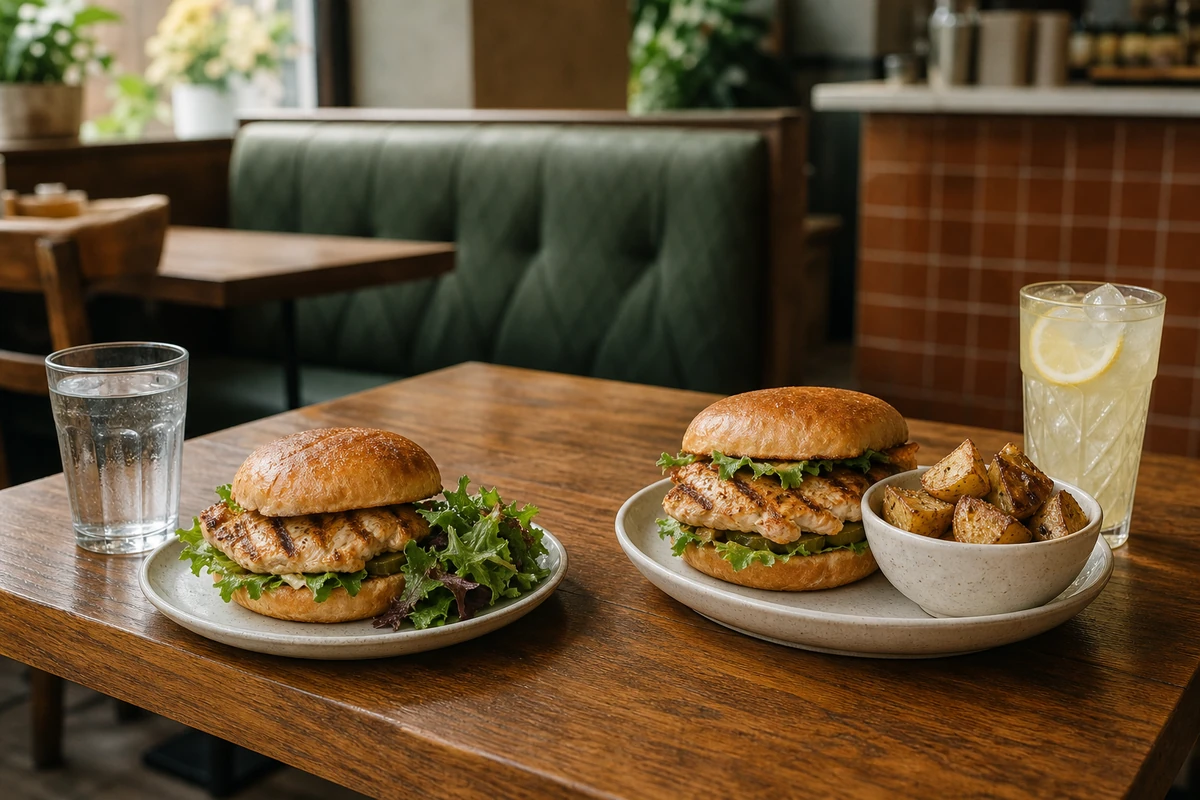
AI-generated editorial image. This illustrative scene is not a documented restaurant promotion or customer study.
Start with one dining occasion and observe what guests actually buy, not what you assume they earn. Offer a clearly priced meal choice that everyone can select. Compare order counts, items per order, add-on rates and contribution with similar periods. Expand only when the offer supports worthwhile visits without quietly replacing more valuable orders.
An average guest is a weak starting point for an offer
One lunch guest wants a complete meal at a predictable price. Another wants a favorite sandwich and a premium drink. A third skips the drink altogether. Combining those orders into one average check does not tell you which choice needs a better offer.
Modern Restaurant Management's October 14 interview with Revenue Management Solutions describes different spending patterns across household-income groups. That is a reason to examine purchasing behavior, not permission to guess an individual guest's income from appearance, address or order size.
Revenue Management Solutions is a commercial restaurant pricing and revenue-management consultancy. Its September 2026 trend report covers U.S. quick-service restaurant performance in August: traffic fell 3.5 percent year over year and items per transaction fell 0.4 percent. Those figures are category context, not a benchmark for your restaurant or evidence that a particular discount will work. The interview and the primary report draw on the same organization's research; they are not independent confirmations.
Read the occasion, not an income label
Start with a situation your team can identify and serve consistently: weekday pickup lunch, early dinner for two, or an afternoon snack. Choose one location and channel first. An occasion describes the order's context without turning the guest into a presumed budget category.
Review comparable periods in your sales reports. Look for a specific change: fewer completed orders, fewer items in each order, or a shift toward less expensive dishes. Those are different problems. A bigger bundle may not help when guests simply want a smaller meal, and a lower entry price may not fix a confusing pickup experience.
- Keep pickup, delivery and dine-in separate where their costs and ordering patterns differ.
- Compare the same weekdays and service windows, noting holidays, closures and unusual events.
- Define an eligible order consistently; exclude voids and handle refunds the same way in both periods.
- Use aggregated purchasing patterns. Do not create guessed income labels or put personal guest details in campaign links.
Let guests choose between honest meal options
Keep a satisfying entry choice visible alongside a fuller meal. For example, a sandwich with a modest side and an optional complete meal with a larger side and drink can answer different needs. These are illustrative choices, not tested offers or recommended prices. Your recipes, portions and costs determine whether either option makes sense.
Make the distinction explicit: what is included, portion differences, substitutions, availability and the total shown before checkout. Do not make the entry option feel like a trap by hiding essential extras. Keep the normal menu available and show the same public choices to everyone eligible for the offer.
For a clean first test, change one thing: introduce one complete-meal option while leaving existing individual-item prices and other promotions unchanged. Changing price, portions, menu placement and staff scripts together makes the result harder to interpret.
Separate smaller baskets from cheaper choices
Average spend is useful, but it cannot explain a change by itself. Pair it with items per completed order and the mix of items purchased. If spend falls while item counts hold steady, guests may be choosing less expensive dishes. If item counts also fall, they may be dropping a side or drink. Check the actual item records before deciding.
Bundle reporting needs extra care. Some systems record a whole meal as one item; others report each component. Define a consistent meal-component count or use a separate side-and-drink attachment measure. Otherwise, a new bundle button can make baskets appear smaller even when guests receive the same food.
- Completed orders: count eligible orders, not just orders containing the new offer.
- Net sales per eligible order: use the same discount and refund treatment; keep tax and tips outside food-and-beverage sales.
- Attachment rate: orders with the specified side or drink divided by eligible orders, using consistent component rules.
- Item mix: compare quantities and sales for the entry choice, fuller meal and existing alternatives.
- Contribution: apply a consistent cost method to the whole test window, not only the promoted item.
Look for worthwhile visits, not just offer redemptions
Set the decision rule before launch. Review both contribution per eligible order and total contribution across the service window. For a practical working measure, start with net food-and-beverage sales and subtract consistently calculated food, packaging and order-specific variable costs. Record any extra staffing or promotion expense separately. This is a management comparison, not a calculation of full restaurant profit.
An offer can sell well while existing full-price orders decline. If total orders barely change and more guests move into a lower-contribution meal, the promotion may be replacing sales rather than earning new visits. Examine the whole order mix before celebrating redemption volume.
Use matched periods and, where practical, a comparable untreated service window as a reference. Record weather, local events, staffing changes and concurrent promotions. A before-and-after difference is directional evidence, not proof that the offer caused every change.
Make the choice easy without pressuring the guest
Give staff a factual explanation: the sandwich comes with the small side; the complete meal includes the larger side and drink. They should not assign a guest to a budget tier or make assumptions about who can afford an upgrade. An optional fuller meal should remain optional.
Before launch, place a permitted test order through the actual ordering path and verify the displayed total, receipt, kitchen instructions and reporting. Check substitutions and out-of-stock behavior too. Clean up the test according to your normal process so it does not contaminate the results.
Watch complaints, remakes, refunds, wait time and abandoned orders where measurable. Pause if guests misunderstand the offer or the kitchen cannot execute it reliably. A higher check is not useful if it makes the next visit less likely.
Expand the choice only after the small test holds up
Keep the initial run narrow and long enough to include comparable service periods. If orders, contribution and guest-experience guardrails move in a useful direction, repeat the test before widening it. If only the average check improves, inspect whether fewer guests ordered or whether the more affordable choice disappeared from view.
The goal is not to discover what every guest earns. It is to learn which transparent meal choice makes a particular visit feel worthwhile, while leaving room for guests who want something simpler or more complete. Let that observed choice guide the next offer.
Submit a restaurant or local business.
Share the business details, useful links, and what makes the place worth knowing for possible Restaurant Tech Report coverage.
FAQ
Should a restaurant tailor meal offers to guessed guest income?
No. Use observable dining occasions and aggregated purchasing behavior instead. Keep public meal choices clear and let eligible guests select the option that suits them; do not assign income labels from appearance, address or order size.
Can average check show whether guests are dropping add-ons?
Not by itself. Compare items per completed order, side-and-drink attachment and item mix. Keep bundle-component reporting consistent so a new meal button does not create a misleading change in the item count.
What would justify expanding a restaurant value offer?
A repeated, comparable test should support worthwhile eligible orders and total contribution without worse complaints, refunds or execution problems. Strong offer sales alone are not enough if they mostly replace existing higher-contribution orders.