
Pick one recent week and compare the guests you served in each channel with the guests who chose to hear from you and can be matched to a single profile. That reachable-guest rate shows where satisfied diners leave anonymous. Close the biggest gap with one voluntary, clearly explained invitation, then track opt-ins, unsubscribes, and return visits.
Why DoorDash's DashOS news puts the guest list back in focus
QSR Magazine reported on September 30, 2026, that DoorDash introduced DashOS at its Dash Forward 2026 event. According to the report, the platform connects DoorDash Marketplace with the company's direct ordering, loyalty, reservation, and marketing products so a restaurant can recognize the same guest across delivery, direct ordering, and dine-in visits.
The report describes the problem plainly: guests move between channels, but their activity often lands in separate systems, so one person can look like several unrelated customers. QSR also notes that guests must opt into a restaurant's loyalty program or agree to share their information for marketing before the restaurant can see eligible activity and contact them directly.
This is DoorDash describing its own product, and the company told QSR it still has work to do to make the pieces operate as one system. The useful question for any restaurant, whether or not it uses DoorDash, is simpler: of the guests you served last week, how many could you actually invite back?
- Treat platform announcements as a prompt to check your own guest list, not as proof of results.
- Separate what a vendor reports from what your restaurant can verify in its own data.
- Start with the guests you already served before spending more to reach strangers.
A reservation list is not a customer list
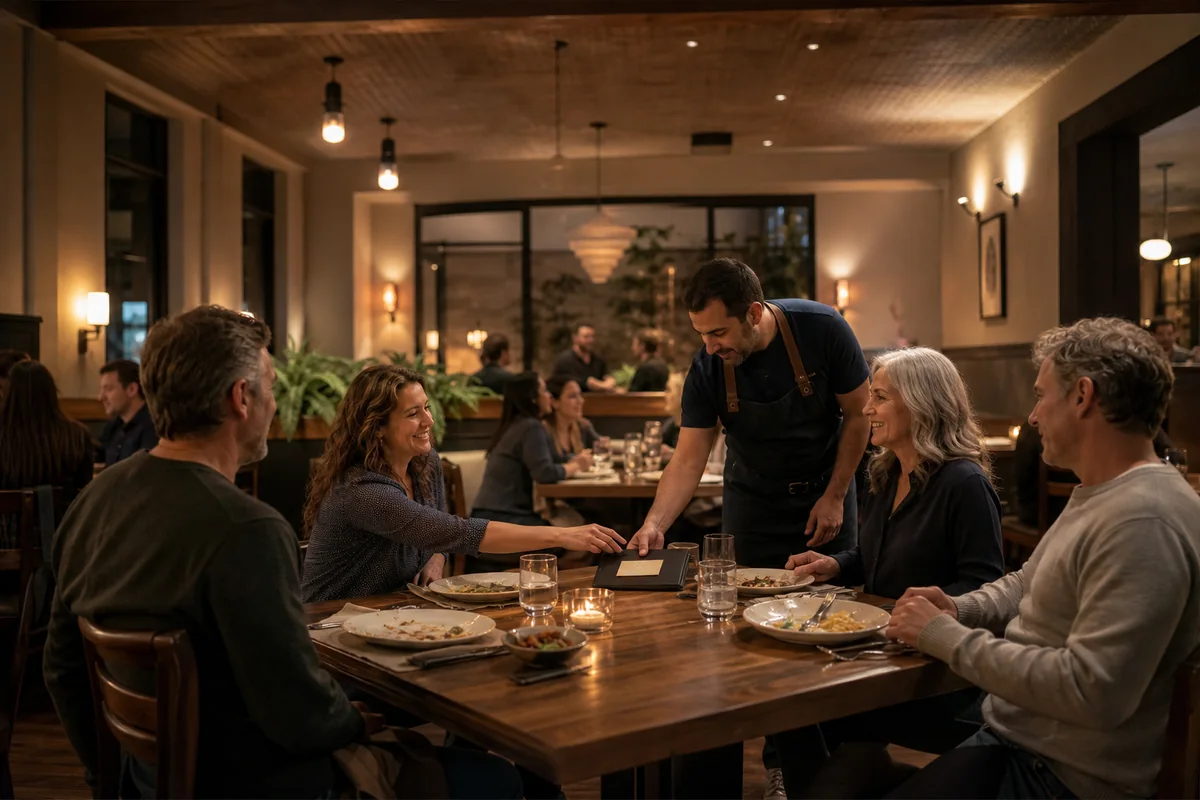
In a Modern Restaurant Management column, Nigel Diamond, a director at the customer communications company Connect98, uses a simple example: a table of four where one person made the reservation. The restaurant probably knows that person, but the other three ate the same food and received the same service, and unless they identified themselves another way, the restaurant may know nothing about them.
His point is that the reservation system has not failed. It records who booked, not everyone who shared the experience. The same gap shows up elsewhere: walk-ins who pay and leave, the coworker who did not place the group order, the family member who picked up dinner, and delivery guests whose relationship sits mostly with a marketplace.
Because the column comes from a company that sells customer communication services, read it as a useful framing rather than a neutral benchmark. The framing still holds up as a question any operator can test.
- Covers served and guests you can contact are two different numbers.
- The person who booked is not always the guest most likely to return.
- Every channel has its own version of the anonymous table-mate.
Calculate your reachable-guest rate by channel
Choose one normal recent week. For each channel, write down roughly how many guests you served, then how many of those guests have chosen to hear from you and can be matched to one clean profile. Divide the second number by the first. That is your reachable-guest rate for that channel.
Keep the math honest. Dine-in covers are people, while pickup and delivery orders may represent more than one person, so label which unit you counted. Remove duplicate profiles before counting, and do not count a guest as reachable unless they actually agreed to the kind of message you plan to send. The goal is a consistent baseline you can repeat, not a perfect census.
- Reserved dine-in: covers served versus opted-in guests from those parties.
- Walk-in dine-in: covers served versus guests who joined a list, loyalty program, or waitlist with permission.
- Direct online ordering: orders versus guests who opted in at checkout or created an account.
- Third-party delivery: orders versus guests whose information the platform shares with you under its terms and the guest's consent.
- Catering and group orders: participants versus the organizer and anyone else who opted in.
Find where satisfied guests leave anonymous
Once the rates sit side by side, the weakest channel usually stands out. A restaurant may have strong coverage for whoever books a table and almost none for walk-ins, or a healthy direct-order list and very little from delivery. Look for the channel with high volume and a low rate first; that is where the most familiar faces are walking out unknown.
Then walk the guest path for that channel and note every moment a guest could reasonably choose to stay in touch: the host stand, the table, the check, the receipt, the pickup bag, the order confirmation, or the next-visit card. Most restaurants already have these moments. They just have not decided what to offer at them.
- Rank channels by guests served and reachable-guest rate together.
- Pick one channel to improve first instead of adding sign-up prompts everywhere.
- List the natural moments in that channel where a guest has a free hand and a reason to say yes.
Offer a reason to stay in touch, not a form
The MRM column warns against making dinner feel like an application. Participation should be voluntary, guests should understand what they are signing up for, and the process should be simple enough not to interrupt the meal. The examples it gives are practical: hearing about a future event, a menu change, a special evening, or late availability.
Write the invitation around one of those reasons. A short line such as joining the list for first notice of the next tasting night is clearer than a generic request for an email address. Say what the guest will receive, roughly how often, and how to stop. For commercial email, the FTC's CAN-SPAM compliance guide explains requirements such as a clear opt-out and a valid postal address; text messages carry their own rules, so confirm the requirements that apply to your program before sending.
- Name the specific benefit: events, new dishes, special nights, or open tables.
- Ask once, at a natural moment, and accept no for an answer.
- Explain what guests will receive, how often, and how to opt out.
- Keep consent records with the guest profile, not in a manager's notebook.
Ask hard questions before connecting every channel
Connected platforms promise to stitch delivery, direct ordering, reservations, and loyalty into one guest view. QSR reports DoorDash is expanding connections with several POS and ordering providers and expects broader access to SevenRooms guest profiles and loyalty products for restaurants on those systems starting in 2027. Before adopting any connected platform, get clear answers in writing.
These questions apply to every vendor, not only DoorDash. The answers decide whether a bigger guest list is really yours to use.
- Exactly what does the guest's opt-in cover, and is it the same in every channel?
- Can the restaurant export its guest list and consent history if it changes systems?
- How are duplicate profiles from delivery, direct orders, and reservations merged?
- Which of your current POS, ordering, and reservation tools actually connect today?
- What does each piece cost, and which features depend on staying on one platform?
Measure the rate first, then the return visits
Recalculate the reachable-guest rate for the same channel every week for a month after you change the invitation. Track how many guests were asked, how many opted in, and how many later unsubscribed. A rising opt-in count paired with heavy unsubscribes means the promise did not match the messages.
Return visits are the real goal, so compare guests you can reach with a similar period or group, and be careful about cause and effect. QSR reports that DoorDash says loyalty members at participating restaurants order 1.8 times as often and spend about 1.75 times as much per person as non-members. That is a vendor-reported comparison, and guests who enroll may already be more frequent visitors. Use your own before-and-after numbers to decide whether the effort is paying off.
- Weekly reachable-guest rate for the chosen channel.
- Opt-ins per invitation moment and unsubscribes per message.
- Return visits or orders from reachable guests compared with a baseline period.
- Notes on events, weather, or promotions that could distort the week.
Submit a restaurant or local business.
Share the business details, useful links, and what makes the place worth knowing for possible Restaurant Tech Report coverage.
FAQ
What is a reachable-guest rate?
It is the share of guests served in a channel who have chosen to hear from the restaurant and can be matched to one profile. It shows how many recent guests you could actually invite back, which is different from the total size of a contact database.
Should staff ask every guest at the table for contact information?
No. Participation should be voluntary and easy to decline. Offer one clear reason to stay in touch at a natural moment, such as the check or receipt, and let guests who are not interested enjoy the visit without pressure.
Does connecting delivery data mean the restaurant owns those customers?
Not automatically. What a restaurant can see and use depends on the platform's terms and what the guest agreed to. QSR reports that DashOS requires guests to opt into loyalty or agree to share information for marketing before the restaurant can contact them directly.
Is this legal advice about email or text marketing?
No. This article is educational. Email and text messages have separate rules, so review official guidance such as the FTC's CAN-SPAM guide and confirm your obligations with a qualified advisor before launching a program.