
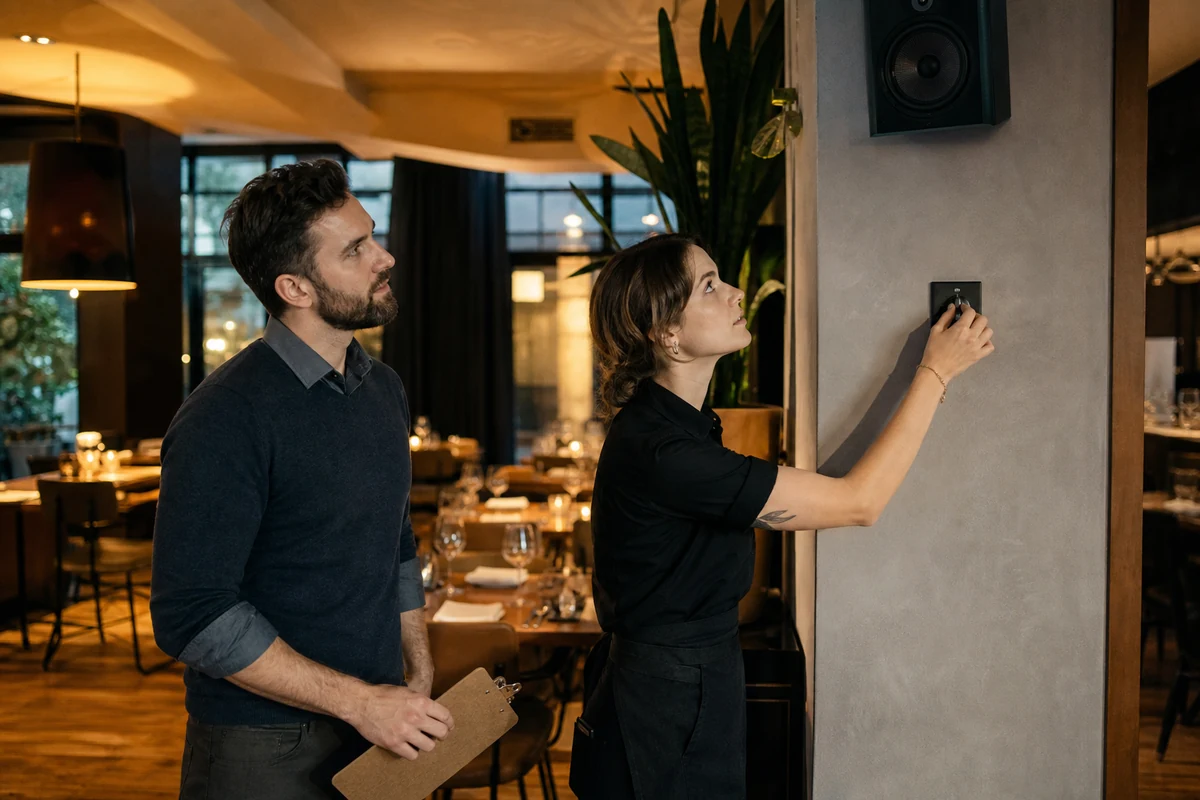
Audit restaurant music by choosing one guest outcome, walking the room during real service, recording volume and playlist changes by daypart, and testing one adjustment at a time. Compare guest feedback, complaints, loyalty sign-ups, featured-item orders, and repeat visits only where your systems can measure them consistently. Treat vendor results as hypotheses, not promises.
Start With the Evidence—and Its Limits
A recent Modern Restaurant Management article argues that in-store audio can become a measurable guest-engagement channel rather than passive background. The article was written by Joe Comer, CEO of the music-platform vendor Custom Channels, so restaurant operators should read its case examples as a supplier perspective and turn the claims into questions for their own locations.
One study cited in the article was commissioned by BMI and conducted by NRG in 2022. It surveyed 1,000 nationally representative U.S. adults age 21 and older who said they visited eating and drinking establishments at least three times per month, plus six interviews with small-business owners or managers. The report says 83% of surveyed consumers agreed that good music can make a bar or restaurant visit more memorable. It also states that BMI wanted the work to support its sales efforts, which makes the findings useful directional evidence—not a promise that music will create the same result in every restaurant.
A separate 2025 loyalty report from Nation's Restaurant News and Restaurant Business surveyed more than 450 foodservice operators. Its respondents described loyalty as an important sales channel, but the report measured operator opinions and self-reported practices, not whether audio caused loyalty growth. The practical lesson is to connect atmosphere to a restaurant-specific test before investing in a new platform or promotional program.
- Identify who produced, sponsored, and participated in any study.
- Separate a vendor case study from independent evidence.
- Use outside results to design a local pilot, not forecast guaranteed sales.
Choose One Guest Outcome Before Changing the Sound
Restaurant music can serve several purposes: create a comfortable atmosphere, reinforce the concept, make a wait feel intentional, support a daypart, or draw attention to a loyalty or menu message. Trying to improve every outcome at once makes the result impossible to read.
Pick one question for the pilot. For example: Does a calmer lunch playlist reduce volume complaints? Does clearer audio messaging increase verified loyalty scans during a defined daypart? Does a better-matched dinner playlist improve guest feedback without slowing service? The outcome should match data the restaurant already collects reliably.
Write the question before selecting a playlist, vendor, or promotion. That keeps the technology decision tied to a guest problem instead of turning the project into a search for features.
- Name one daypart and one location or dining zone.
- Choose one primary measure and two guardrails.
- Decide what result would justify keeping, changing, or ending the test.
Walk the Real Guest Path During Service
A manager should hear the restaurant as a guest hears it. Walk from the entrance to the host stand, waiting area, dining room, bar, pickup shelf, restrooms, and patio during the actual daypart being tested. Record places where the music disappears, overwhelms conversation, competes with kitchen noise, or changes abruptly between zones.
Check the human layer as well. Ask hosts, servers, bartenders, and shift leaders what guests mention, when staff strain to hear orders, and whether anyone changes the volume without recording it. Those observations can reveal why a playlist that sounds good before opening fails during a full service.
Keep the audit simple enough to repeat. A one-page log with time, occupancy, playlist or program, volume setting, guest comments, staff comments, and any operational anomaly is more useful than a one-time opinion from an empty room.
- Listen at opening, peak volume, and the final hour of the daypart.
- Check every guest-facing zone, not only the manager's usual position.
- Record manual volume changes and the reason for each change.
- Note unrelated disruptions so they are not mistaken for audio effects.
Run a Small Pilot With One Controlled Change
Use a short baseline period under the current setup, then change one variable. That variable might be volume, playlist energy, daypart timing, or one concise in-store message. Keep menu pricing, offer structure, placement, and staff instructions stable where possible so the comparison remains understandable.
If the pilot includes a loyalty or featured-item message, give it a distinct code, QR destination, or POS button that can be checked independently. A raw increase in total sales is too broad to attribute to audio because weather, staffing, local events, promotions, and normal weekly variation can move the same number.
Before the pilot begins, tell the team exactly when it runs, who may change the sound, what to record, and when to stop. Pause the test if guests cannot converse comfortably, staff cannot hear orders, complaints increase, or the message conflicts with the actual offer or item availability.
- Compare like dayparts and similar days when possible.
- Change one guest-facing variable at a time.
- Use a trackable action rather than a general sales claim.
- Set operational and guest-experience stop conditions in advance.
Decide From the Full Visit, Not One Exciting Number
Review the primary measure alongside the guardrails. A rise in loyalty scans may not be worth keeping if complaint volume climbs or staff must repeat orders. A playlist that guests praise may still need a different volume schedule at peak occupancy. The decision should protect the whole visit, not optimize one isolated metric.
When the pilot ends, document what changed, what did not, and which outside factors may have influenced the result. If the signal is promising, repeat it before expanding to more dayparts or locations. If the signal is unclear, improve the test design rather than buying more technology.
Use the same discipline for other Restaurant Tech Report growth decisions: start with a guest problem, choose measurable evidence, run a bounded test, and keep only what helps more people choose the restaurant, enjoy the visit, or come back.
- Review guest response, staff usability, and the chosen business measure together.
- Repeat a promising test before a wide rollout.
- Document the final setting and owner so results survive shift changes.
Submit a restaurant or local business.
Share the business details, useful links, and what makes the place worth knowing for possible Restaurant Tech Report coverage.
FAQ
How long should a restaurant music pilot run?
Use enough comparable services to see normal variation across the chosen daypart, then repeat a promising result before expanding. The right duration depends on traffic, seasonality, and how often the tracked action occurs; avoid judging the test from one unusually busy or quiet shift.
What should a restaurant measure during an audio test?
Choose one primary measure tied to the test, such as verified loyalty scans or a tracked featured-item order. Pair it with guardrails including guest comments, volume complaints, staff ability to hear orders, refunds, remakes, and any unplanned changes during service.
Should a restaurant use promotional messages between songs?
Only if the message supports one current, accurate guest action and can be measured separately. Keep it concise, confirm the offer or item is actually available, and stop if the message disrupts conversation or creates confusion for guests and staff.
Does a vendor case study prove in-store audio will increase sales?
No. A vendor case can suggest a testable idea, but differences in concept, traffic, menu, staffing, offer design, and measurement can change the outcome. Use the case to build a local pilot and avoid treating the reported result as a forecast or guarantee.